The Middle Ages
Carbon Robot (2025)
Carbon Robot’s album The Middle Ages serves as a reflective journey through the complexities of midlife, transitioning from a desperate need to "break free" from the mundane daily grind to a peaceful embrace of an unremarkable, "ordinary life"
Try Not to Linger on the Things That Make You Sad…
The album contains recurring themes of nostalgia, such as revisiting childhood haunts and outgrowing one's youth, while balancing the stagnation of daily routines against the hope for new beginnings. Many tracks offer introspective advice on overcoming personal obstacles, embracing an ordinary life, and finding peace with the inevitability of aging. Reflections on parenting, procrastination, and the shifting nature of work further anchor the album in a relatable, mid-life perspective. Ultimately, the collection portrays a journey of self-acceptance and the quiet wisdom gained from past mistakes.
Recurring themes
Nostalgia vs. Moving Forward
A central tension throughout the album is the pull of the past. In "Trebuchet," the narrator is "launched" back to 1985 by a "paper hearted ticket stub," yet realises they "can't live forever in the past". Similarly, "A Different Place" recounts a "cold walk down memory lane" to a childhood town that is unrecognisable, emphasising that while smells remain the same, the world has moved on.
The Mundane and Procrastination
Several tracks detail the "daily grind" of modern life. "Yesterdays Tomorrow Today" is a candid look at wasting time on phones and emails while "planning for yesterday’s tomorrow today". "Slow Day" echoes this sentiment, describing a "power saving mode" existence fueled by "coffees and tea breaks and podcast and gin".
Acceptance of the "Ordinary"
Perhaps the most defining theme is the embrace of being "unremarkable". In "Ordinary Life," the narrator proudly identifies as "simply vanilla" and "middle of the road," finding peace in being a "complete unknown" who is "comfortable with ordinary life".
Resilience and Perspective
The songs frequently advocate for a positive mindset amidst hardship. "Waiting For The Sun" and "Try Not To Linger" focus on sticking it out through "overcast and gray" skies and not letting "darkness" or "sadness" linger. "You’ll Never Wipe The Smile" reinforces this defiance, with the narrator refusing to worry about things that are "simply not there"
The songs navigate the tension between the pull of 1985 nostalgia and the "power saving mode" of modern adult responsibilities, urging the listener to find resilience amidst obsolescence and not "linger on the things that make you sad".
The Story Arc
The album follows a narrative arc that moves from escapism and struggle to acceptance and generational transition.
Departure and Disquiet
The journey begins with a literal and metaphorical flight. "Heading To New England" depicts a desperate need to "break free from the quicksand" of a day job and start fresh. However, this is immediately met with the internal struggles of "night terrors" and the paralysis of procrastination.
The Crisis of Relevance
The middle of the album grapples with the fear of being replaced. "The Longest Day" describes the pain of seeing "machines whisper" as they replace the narrator's handiwork, leaving them to feel like "cold numbers" on a screen. This leads to a period of "trudging" through "slow days" and trying to find "blessings" in the face of aging.
The Wisdom of "The Middle Ages"
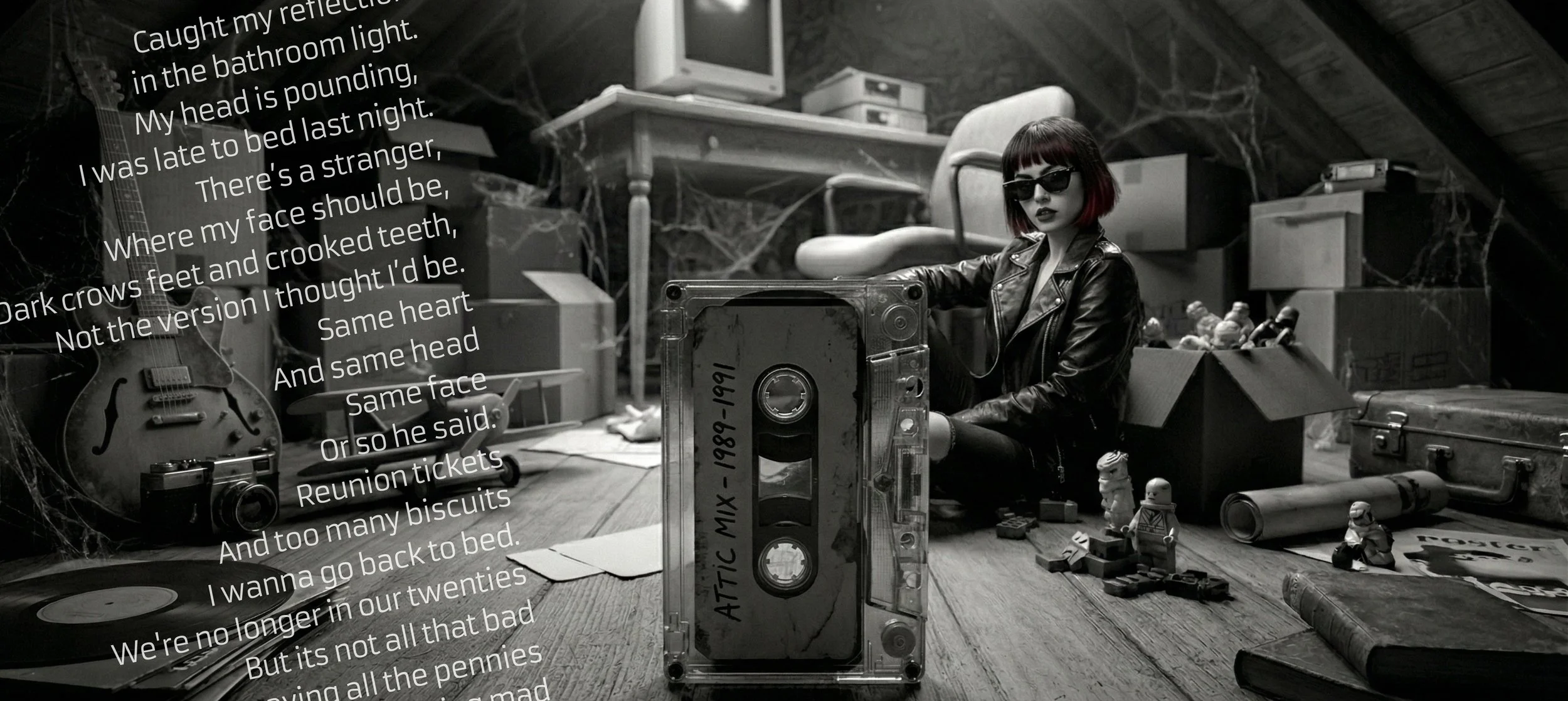
The arc shifts toward a more settled perspective. Tracks like "Here Come The Quiet Ones" celebrate "wisdom over youthful valor," noting that while the fire in their eyes "burns a little calmer now," it comes from the lessons of "failed tries". "No Longer In Our Twenties" serves as a grounded anthem for this stage, acknowledging "crooked teeth" and "pensions" but concluding there is "no reason to be sad".
Full Circle
The album concludes with "You’re Welcome Back Here Any Time," which completes the cycle of life. The narrator, who began the album by "leaving my life behind" and flying to a new world, is now the parent standing at the door. They watch their own child leave home after 18 years, offering the same "bright skies" they once sought, while promising that home will always be waiting.
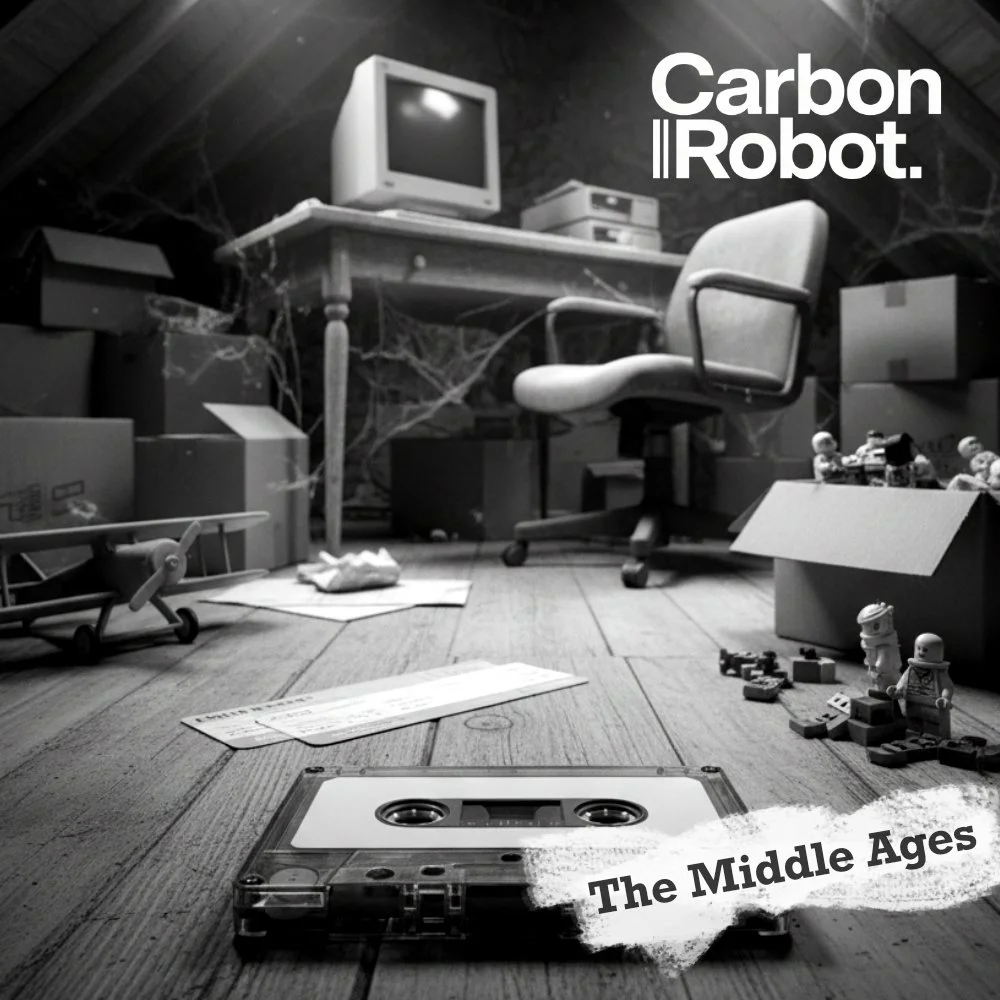
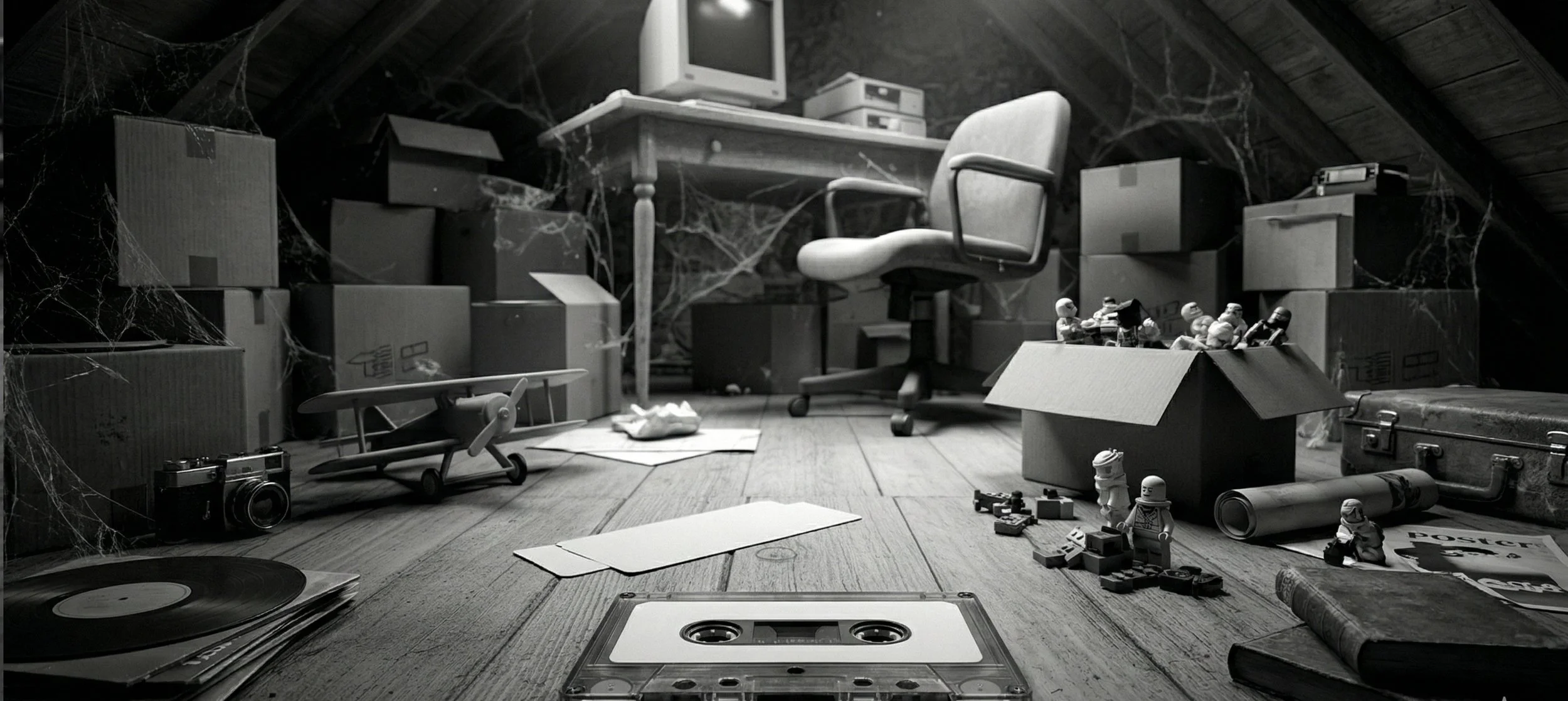
“The album cover sets this tone visually, depicting a cluttered attic filled with a mix of retro tech—like a cassette tape and a boxy monitor—and discarded childhood toys, all covered in cobwebs.”